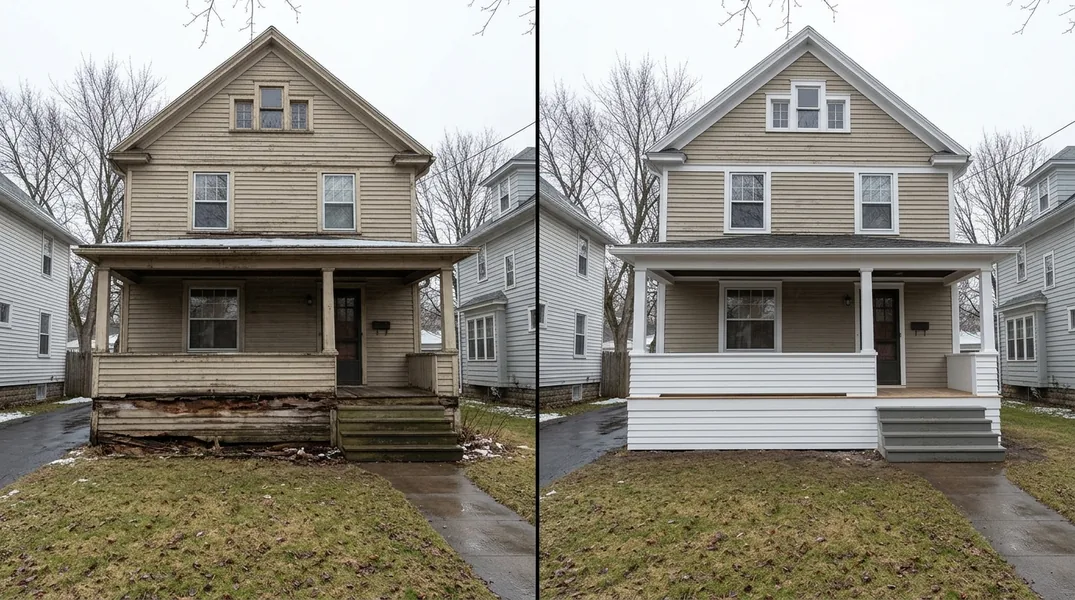
The Perfect Storm: Why Rochester Winters Cause Wood Rot
If you own a home in Rochester, you know that winter brings more than just snow and cold. The region's climate creates ideal conditions for wood rot and structural damage that many homeowners don't see coming until it's too late. The problem isn't just the cold itself, but the constant freeze-thaw cycles that Rochester experiences from November through April.
When ice dams form on your roof, water backs up beneath the shingles and finds its way into the fascia boards, soffits, and the wood framing behind your gutters. This trapped water has nowhere to go but deeper into the wood structure. Then, as temperatures drop, that moisture freezes and expands, creating tiny cracks and gaps. When it thaws, water seeps further in. This cycle repeats dozens of times throughout a Rochester winter, and each cycle weakens the wood a little more. Unlike dry rot, which develops slowly over years in stable moisture conditions, ice dam damage accelerates rapidly because of these constant temperature swings.
How Ice Dams Lead to Fascia Rot and Hidden Structural Damage
Your fascia board is the horizontal trim that runs along the edge of your roof where the gutters attach. It's one of the first lines of defense against water intrusion, but it's also one of the most vulnerable parts of your home during Rochester's heavy snow seasons. When an ice dam forms, water pools behind it and soaks into the fascia wood. Because fascia is typically made of softer wood or composite materials, and because it's constantly exposed to moisture, rot develops quickly.
What makes ice dam damage particularly dangerous is that it often hides deeper problems. The water that damages your visible fascia board also runs down behind the gutters, soaking the subfascia, the roof decking, and even the wooden beams and trusses that support your entire roof structure. By the time you notice peeling paint or soft spots on the fascia, the damage inside may already be extensive. This is why Wood Rot & Dry Rot Repair in Rochester often requires more than just replacing a fascia board. A professional inspection can reveal the full extent of water damage before it compromises your home's structural integrity.
Snowmelt and Poor Drainage: A Recipe for Dry Rot in Rochester Homes
While ice dams grab headlines, snowmelt is equally destructive. When snow accumulates on your roof and around your foundation throughout the winter, the spring thaw sends massive amounts of water downward all at once. If your gutters are clogged, damaged, or improperly pitched, this water doesn't flow away from your home. Instead, it pools around your foundation, seeps into basement walls, and saturates the soil around your crawl space or basement framing.
Dry rot thrives in these conditions. Despite its name, dry rot fungus needs moisture to grow, and it can spread through wood at an alarming rate once conditions are right. The difference between dry rot and wet rot is that dry rot can spread to wood that isn't directly wet, traveling through the structure along mycelium threads and causing damage far from the original water source. In Rochester homes, poor drainage combined with snowmelt creates the perfect environment for this fungus to establish itself in your Floor Joist & Subfloor Repair areas, basement wooden beams, and crawl space framing. Once dry rot takes hold, it's far more difficult and expensive to address than catching regular wood rot early.
Warning Signs of Ice Dam and Snowmelt Wood Damage
Early detection is your best defense against expensive structural repairs. Look for these warning signs during and after Rochester's winter and spring seasons. Soft or spongy fascia boards that feel mushy when you press on them indicate active rot. Peeling or bubbling paint on your fascia, soffits, or trim is often a sign that water has penetrated the wood beneath. Staining or discoloration on interior walls near the roofline, especially in attics or upper-floor rooms, suggests water is leaking in from above.
Inside your home, watch for musty odors in basements, crawl spaces, or attics. This smell often indicates mold growth, which accompanies wood rot. Visible mold, especially on wooden beams or joists, is a red flag. Sagging ceilings, warped subflooring, or soft spots in your basement floor suggest that structural wood has been compromised. If you notice any of these signs, don't wait for spring to have them inspected. Calling a professional for a free estimate now can save you thousands in repairs later.
Professional Ice Dam Damage Repair and Wood Rot Solutions
Addressing ice dam damage and wood rot requires more than a DIY patch job. A professional carpenter will first identify the source of the water intrusion, which might be a damaged gutter, inadequate roof ventilation, or poor attic insulation. These underlying causes must be fixed, or the rot will return. Once the water source is controlled, damaged wood can be replaced or treated depending on the severity of the damage.
For fascia rot repair, this typically involves removing the damaged fascia board, inspecting the subfascia and roof decking beneath it, and replacing any compromised wood with new material. The new fascia is then sealed and painted to prevent future water intrusion. For deeper structural damage, such as rotted roof trusses or floor joists, the repair process is more involved and may require temporary support beams while damaged wood is cut out and replaced. Rochester Carpentry has the expertise to handle both simple fascia repairs and complex structural restoration, ensuring your home is properly protected against future winter damage.
Wood Rot & Dry Rot Repair Cost in Rochester: What to Budget
The cost of repairing ice dam and snowmelt damage varies widely depending on how much wood is affected and how deep the damage goes. A simple fascia board replacement might cost between $500 and $1,500, while extensive structural repairs involving multiple beams or floor joists can run $5,000 to $15,000 or more. The key factor is how early you catch the problem. Water damage that's addressed in the first few weeks costs significantly less than damage that's been festering for months or years, allowing rot to spread throughout your home's framing.
Rather than guessing at pricing, the best approach is to get a professional assessment. Rochester Carpentry offers a thorough inspection and detailed estimate so you know exactly what needs to be done and what it will cost. Many homeowners are surprised to learn that addressing water damage early actually saves money compared to waiting until structural integrity is compromised. Contact us at (585) 659-1882 to schedule your inspection today.
Preventing Ice Dams and Wood Rot: Your Winter Maintenance Checklist
While you can't eliminate Rochester's harsh winters, you can take steps to minimize their impact on your home. Start by ensuring your gutters are clean and in good repair before winter arrives. Clogged gutters trap water, which freezes and creates ice dams. Make sure gutters are properly pitched so water flows toward downspouts, and ensure downspouts direct water at least 4 to 6 feet away from your foundation. Consider installing gutter guards to reduce debris accumulation.
Improve your attic ventilation and insulation to reduce the temperature difference between your roof and the outside air, which helps prevent ice dams from forming in the first place. Ensure your attic has adequate soffit and ridge vents, and that insulation doesn't block airflow. Check your roof for missing or damaged shingles before winter, and have any repairs made promptly. Grade the soil around your foundation so water drains away, and consider installing a sump pump or French drain if your basement tends to stay damp. These preventive measures won't eliminate the risk entirely, but they'll significantly reduce the likelihood that you'll need expensive wood rot repair next spring.
Looking for a professional carpentry contractor in Rochester? Rochester Carpentry responds fast for all your carpentry needs.
Get a Free QuoteOur services: Wood Rot & Dry Rot Repair · Termite Damage Repair · Floor Joist & Subfloor Repair