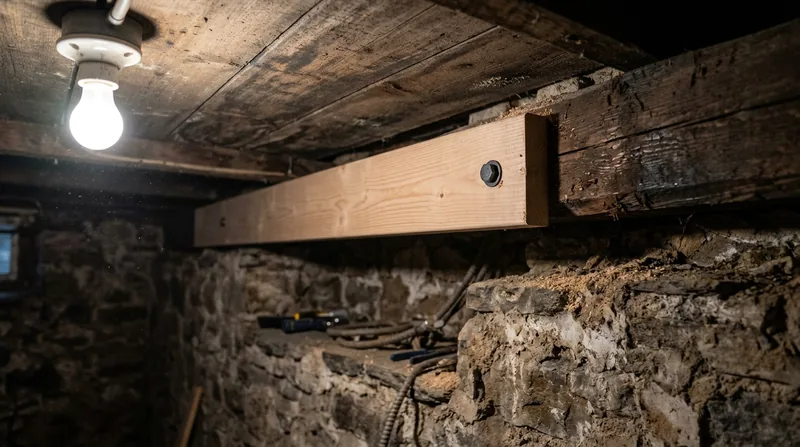




Sagging, bouncy or soft floors are a signature problem in Rochester's oldest neighborhoods. The Corn Hill district, the East Avenue Preservation District, Park Avenue and the 19th Ward are lined with Greek Revival and Victorian homes built in the 1830s through 1920s, where floor joist and subfloor repair has become routine work. A century of lake-effect snow, freeze-thaw cycles, ice dams, and humid summers have rotted sill plates, rim joists and the undersized framing that was standard when these homes were built. Add carpenter ants, old roof leaks, and the weight of modern kitchens and bathrooms on joists sized for parlors and bedrooms, and many floors have settled or weakened. We sister or replace compromised joists, rebuild soft subfloor sections, and level floors before new finishes go down. The work is structural, it matters to safety and resale value, and it's common enough in Rochester that we've developed a straightforward, repair-first approach.
Why Floor Joist and Subfloor Failure Happens Fast in Rochester's Climate
Rochester sits at the Genesee River gorge a few miles south of Lake Ontario. That geography means heavy lake-effect snow, long freeze-thaw winters, and humid summers. Ice dams back up snowmelt into fascia, soffits, sills and porch framing. Leaks from failed roofs and gutters soak into rim joists and band boards. Carpenter ants follow the moisture. Older homes built before 1978 have wood framing that's already a century old and undersized by today's standards. When a kitchen renovation adds 500 pounds of cabinets and appliances to joists that were never designed for that load, the deflection becomes visible: floors bounce, feel soft underfoot, or sag visibly at the center of a span.
The damage cascade is predictable. A small leak becomes a soft spot in the subfloor. That soft spot spreads as moisture wicks through the wood. Joists lose bearing capacity. Floors move more. Finishes crack. Drywall splits upstairs. What starts as a nuisance becomes a structural liability. The cost to address it early, when sistering or localized replacement works, is a fraction of what it costs when the rot has spread across an entire bay or when the joist has failed completely.
- Ice dams and snowmelt back up under fascia and soffits, saturating rim joists and sill plates in homes across Brighton, Pittsford and Penfield.
- Carpenter ants colonize damp framing and tunnel through joists, reducing bearing capacity without visible damage from above.
- Undersized joists (common in 1800s and early 1900s homes) deflect under modern kitchen and bathroom loads, causing floors to sag or bounce.
- Leaks from roofs, gutters and bathroom plumbing feed rot into subfloor sections, often for years before the damage becomes obvious.
- Old wood loses strength over time, and a joist that was adequate in 1890 may be marginal or failed by 2024.
Addressing these problems early prevents bigger, costlier structural work down the road.
Key info: Rochester's oldest neighborhoods (Corn Hill, East Avenue, Park Avenue, the 19th Ward, Browncroft, the South Wedge) were built almost entirely before 1950. Nearly all homes in these areas predate the 1978 lead-safe threshold and many have original wood framing. Ice dams and snowmelt are the dominant cause of rim joist and subfloor rot in our region. A free inspection can identify whether a soft floor is early-stage rot, advanced decay, or undersized framing that needs sistering. For more on water damage and rot, see our wood rot and dry rot repair page.
For Rochester permit requirements on structural joist replacement, check with the City of Rochester Building Department or your town code office (requirements vary by municipality).
How We Repair and Restore Floors: A Step-by-Step Process
Floor joist and subfloor repair is structural carpentry, not cosmetic. Our process starts with a detailed inspection to map the extent of rot, identify the moisture source, and assess whether repair or replacement is the right answer. We don't assume every soft floor needs a full joist replacement. Often, sistering (bolting a new joist alongside the weak one) is enough. Sometimes only a section of subfloor needs replacement. The goal is to do the minimum necessary work, done correctly, to restore the floor to level and stable.
- We inspect the joist from below (basement or crawlspace) and probe for soft wood, rot, insect damage and bearing failures.
- We identify and stop the moisture source (roof leak, ice dam, plumbing, condensation) before repair begins.
- We measure deflection and load to determine whether the joist can be repaired by sistering or must be replaced.
- We remove flooring, subflooring and underlayment as needed to access the framing.
- We sister new pressure-treated or kiln-dried lumber alongside the damaged joist, bolting it securely to share the load.
- We replace compromised subfloor sections with new plywood, screwed and glued to the joists.
- We level the floor using shims and blocking, checking with a laser level to catch high and low spots.
- We reinstall underlayment, flooring and finishes, matching the existing material and profile where possible.
The entire process takes 3 to 7 days, depending on the scope and access. We work from below whenever possible to minimize disruption to the floors above.
Example: A 1920s Colonial in Irondequoit had a soft spot in the kitchen floor. The homeowner noticed it after heavy snow and ice dams that winter. We found rot in the rim joist and the outer 18 inches of the subfloor, fed by snowmelt backing up under the fascia. The main joists were sound. We sistered two new joists to the rim, replaced the subfloor, and installed new ice-and-water shield under the fascia. The repair cost $3,400 and took 4 days. Replacement of all four joists in that bay would have run $5,800 and required more structural work. Catching it early made all the difference.
Repair Methods: Sistering, Replacement, and Subfloor Rebuild
| Approach | Description | Best for |
|---|---|---|
| Sistering | Bolt a new joist alongside the damaged one, sharing the load. The original joist remains in place. | Rot confined to the outer face or edge of the joist, or carpenter ant tunneling that hasn't reduced bearing capacity critically. Preserves the original framing. |
| Full Joist Replacement | Remove the damaged joist entirely and install a new one, matching the original size and grade. Requires temporary support posts. | Rot or damage affecting more than 30 percent of the joist depth, or structural failure at the bearing points. Common in load-bearing rim joists and band boards. |
| Subfloor Section Replacement | Remove rotted plywood or hardwood subflooring and replace with new material, screwed and glued to intact joists below. | Moisture damage and rot in the subfloor that hasn't spread to the joists. Often paired with sistering or joist replacement. |
| Rim Joist and Sill Plate Repair | Address rot in the band board or rim joist that runs around the perimeter of the house. May involve sistering, local replacement, or caulking and sealing to stop future water entry. | Ice dams, snowmelt and gutter overflow backing up into the rim joist. Most common failure mode in Rochester homes, especially on the north and east sides where ice dams form. |
| Floor Leveling and Shimming | Use shims, blocking and selective joist sistering to bring floors back to level or within acceptable tolerances for new finishes. | Older homes where original settlement or joist deflection has created a sloped or wavy floor. Necessary before hardwood, tile or other finishes are installed. |
The choice between these methods depends on the extent of damage, the location of the joist, and whether the wood can be preserved. We always recommend repair over replacement when the wood is sound enough to carry load. For more on related structural carpentry, see our framing and structural carpentry page.
Floor Joist and Subfloor Repair Cost in Rochester: What to Expect
Floor joist and subfloor repair in Rochester typically starts at $1,800 for a localized sistering job on one or two joists with minor subfloor replacement. Full joist replacement, rim joist overhaul, or repairs spanning multiple bays will run higher. The cost depends on several concrete factors: the number of joists involved, the depth and extent of rot, whether the damage has spread to the rim joist or sill plate, access (basement or crawlspace work is faster than working from above), and whether the moisture source needs repair as well (fascia sealing, gutter work, or roof patching).
A typical mid-range job (two joists sistered, 100 square feet of subfloor replaced, floor leveled) runs $2,800 to $4,200. Large-scale work (replacing multiple joists, extensive subfloor, rim joist restoration) can run $5,000 to $8,000 or more. Getting 2 to 3 estimates is smart. Each contractor will assess the damage differently, and price reflects their method and material choices. We recommend asking what's included at the quoted price: labor, materials, disposal, moisture control, and whether the bid includes addressing the leak source or just the structural repair.
For a detailed breakdown and to see how other common carpentry repairs are priced, visit our pricing overview page. Call us at (585) 659-1882 for a free estimate. We'll walk the job, explain what we find, and give you a clear picture of the cost before any work begins.
Floor Joist and Subfloor Repair Near Me: What Rochester Homeowners Should Know When Hiring a Carpenter
Hiring the right carpenter for floor joist and subfloor repair matters. This is structural work. A poor repair can settle again, or worse, fail under load. When you're looking for a contractor near Rochester, Penfield, Webster, or Gates, here's what to verify before signing a contract.
First, confirm that the contractor is fully insured and can provide proof of general liability and workers' compensation coverage. Ask for references from recent jobs, and follow up with at least two of them. Structural carpentry is not DIY territory, so experience and reputation are worth the time to verify. Second, get the estimate in writing and ask what's included: materials, labor, disposal, and whether the bid assumes access from below or will require floor removal. Third, if the repair involves a load-bearing joist or wall, confirm that the contractor understands whether a permit is required. Joist replacement and load-bearing work often do require a permit in Rochester and surrounding towns. Your town's building department can tell you the threshold. We recommend getting that question answered before the work starts, not after.
Fourth, ask the contractor how they plan to stop the moisture source. A joist repair that doesn't fix the leak will rot again in a few years. Fifth, if you're in a historic district (Corn Hill, East Avenue, the Neighborhood of the Arts), check whether your HOA or historic preservation board has approval requirements. Finally, discuss timeline. Most floor joist jobs take 3 to 7 days. If the contractor quotes 2 days for a large job, that's a red flag. Quality structural work takes time.
For a free estimate and to discuss your specific situation, contact us here. We respond within 24 hours and we're happy to answer questions before you decide to book.
Floor Joist & Subfloor Repair in Rochester: Pricing Guide
| Service | Price | Details |
|---|---|---|
| Joist sistering (1-2 joists) | Starting at $1,800 | New joist bolted alongside damaged one, minor subfloor repair, floor leveling included |
| Mid-range repair (2-3 joists, subfloor section) | Starting at $2,800 | Sistering or replacement, 100-150 sq ft subfloor rebuild, moisture source assessment, leveling |
| Extensive joist and rim board work | Starting at $5,000 | Multiple joist replacement, rim joist restoration, large subfloor sections, fascia or gutter sealing included |
| Full bay or floor system replacement | On estimate | Extensive structural damage, multiple joists, large subfloor area, or complex access requires on-site inspection |
| Travel and estimate | Free | No charge for travel within Rochester service area, free written estimate within 24 hours of inspection |
Indicative pricing, the exact cost depends on square footage, finish, and site access. Free personalized estimate within 24h at (585) 659-1882.


