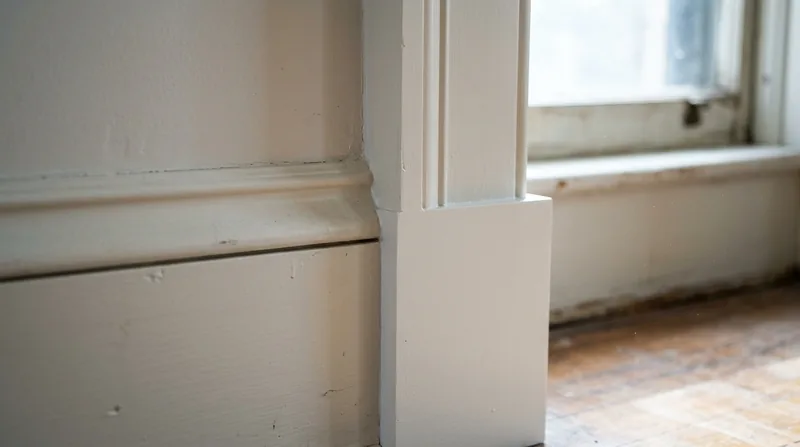




Finish & Trim Carpentry in Rochester demands precision, patience, and an understanding of how Rochester's century-old homes settle and shift with the seasons. From the Greek Revival and Italianate masterpieces of Corn Hill to the grand Victorians along East Avenue, to the Craftsman foursquares of Park Avenue and the newer Colonials of Pittsford and Penfield, every home deserves trim work that fits tight, sits true, and lasts. Tight miters, scribed joints, consistent reveals, and lead-safe practices on pre-1978 homes separate real finish carpentry from quick handyman work. We install casing, crown molding, baseboard, wainscoting, and custom trim throughout the Rochester area, handling the detail work that makes a room feel complete. Whether you're restoring original trim or adding modern finish work to a renovation, we approach each project with the craftsmanship that older homes demand.
Why Finish & Trim Carpentry Matters in Rochester's Historic Neighborhoods
Rochester homes are not generic boxes. The city's residential stock spans nearly two centuries, from 1830s Greek Revivals through Victorian estates, 1900s Craftsman bungalows, mid-century capes and ranches, to modern Colonials. Each era carries its own trim profiles, reveal proportions, and material expectations. Original casing and baseboards in a Corn Hill Italianate or East Avenue mansion are architectural details, not afterthoughts. Poorly fitted trim, mismatched profiles, or sloppy coping joints destroy the character of these homes. Finish carpentry done right preserves and enhances that character. Done wrong, it's a permanent eyesore that no paint covers.
- We scribe and fit trim to uneven walls and floors, common in homes built before 1950 when level and plumb were less critical.
- We match original crown molding, baseboard, and door casing profiles using period-appropriate materials and techniques.
- We cope joints instead of mitering them wherever possible, ensuring trim stays tight as wood moves with humidity and temperature.
- We work lead-safe on all pre-1978 homes, following EPA protocols for dust containment and disposal.
- We install custom wainscoting, built-in shelving, and paneling that suit the home's era and your renovation vision.
Finish carpentry is the final layer of craftsmanship that turns a renovation or new build into a home that feels complete and lived-in.
Local example: A 1920s Tudor in Pittsford had replacement windows installed by a general contractor, but the new interior casing sat proud of the wall and the reveals were inconsistent. We removed and reinstalled the casing with proper scribing and consistent 1.25-inch reveals throughout the room, matching the original profile and bringing the home's interior back into proportion.
For guidance on trim work in historic homes, check Rochester's city planning and heritage resources, which document neighborhood preservation standards.
How We Approach Finish & Trim Carpentry: Our Process
Finish carpentry is not measure-once-cut-once work. Every wall is slightly out of plumb, every floor slopes a little, and wood moves. We start with a detailed site visit to understand the home's condition, the existing trim profiles, and any structural quirks that will affect our fit. We measure at multiple points, account for wall irregularities, and plan our approach before we cut a single piece. Speed is not the goal; precision is.
- We meet on site to assess the trim scope, existing profiles, wall and floor conditions, and any lead hazards on pre-1978 homes.
- We provide a detailed estimate covering materials, labor, timeline, and lead-safe practices where applicable.
- We source materials that match the home's era and your design intent, whether period-correct hardwood or modern paint-grade options.
- We install backing and blocking as needed to support trim and ensure fasteners hold through seasonal wood movement.
- We cut, fit, and install each piece with careful attention to reveals, joints, and finish detail.
- We sand, fill, and prep all trim for paint or stain, leaving surfaces ready for your finish of choice.
The result is trim that looks built into the home, not applied on top of it.
Brighton example: A 1950s ranch renovation called for new crown molding in the living room and hallway. The walls were slightly wavy, and the ceiling height varied by nearly an inch. We scribed and fit each piece individually, using coped joints at inside corners and carefully calculated miters at outside corners. The result was seamless crown that follows the room's contours without visible gaps or misalignment.
We also handle crown molding and baseboard installation as part of our broader finish carpentry practice, and we coordinate with custom built-ins and shelving projects when those are part of your scope.
Finish & Trim Carpentry Methods and Techniques
| Technique | Description | Best For |
|---|---|---|
| Scribing | Fitting trim to uneven walls by marking the profile of the wall onto the trim, then cutting to that profile. | Casing on out-of-plumb door jambs, baseboards on uneven floors, crown on wavy ceilings. |
| Coped Joints | Cutting the profile of one piece of trim into the end of another, allowing pieces to fit tightly at inside corners as wood moves. | Crown molding, baseboard, and any trim with a profile meeting at inside corners. |
| Mitering | Cutting 45-degree angles on the ends of two pieces so they meet at an outside corner, creating a seamless joint. | Outside corners where trim meets, outside corners of door casing, picture rail and chair rail transitions. |
| Blocking and Backing | Installing solid wood backing behind drywall or plaster to provide a solid fastening point for trim and shelving. | Heavy crown molding, wainscoting, shelving, and any application where trim must support weight or movement. |
| Lead-Safe Practices | Containment, dust control, and careful disposal of paint debris and trim from pre-1978 homes per EPA RRP Rule requirements. | All renovation and trim removal on homes built before 1978 in Rochester and surrounding areas. |
Each technique serves a purpose. Coped joints stay tight longer than miters as wood moves seasonally. Scribing lets trim fit walls that will never be perfectly plumb. Blocking ensures heavy trim will not fail over time. Lead-safe work protects your family and our crew on homes built in an era when lead paint was standard.
Finish & Trim Carpentry Cost in Rochester: What to Expect
Finish carpentry pricing depends on scope, materials, complexity, and the condition of existing surfaces. A straightforward door casing install in a newer home costs far less than scribing and fitting crown molding through a 1920s house with uneven ceilings and out-of-plumb walls. Material choices matter too. Paint-grade pine or poplar costs less than hardwood matching an original profile. Custom trim runs higher than stock molding. Lead-safe work on pre-1978 homes adds cost due to containment and disposal requirements, but it is not optional on homes in Rochester built before 1978.
We start estimates at $550 for smaller trim projects, such as casing a single interior door or running baseboard in a single room. Larger scopes, such as crown molding throughout a floor or custom wainscoting in multiple rooms, typically run $1,200 to $3,500 or more depending on linear footage, profile complexity, and wall conditions. Custom built-ins and shelving start higher and scale with design and materials. The best way to know your actual cost is to request a free estimate and have us assess your specific walls, ceilings, and design intent on site. We respond within 24 hours at (585) 659-1882.
See our full pricing overview for additional detail on finish carpentry costs and what moves estimates up or down.
Finish & Trim Carpentry Near Me: What to Look for When Hiring a Rochester Contractor
Not all carpenters are finish carpenters. A framing carpenter can build a sturdy structure. A finish carpenter understands reveals, proportions, joinery, and the patience required to make trim fit perfectly. When you hire for finish work in Rochester, ask to see photos of previous projects in homes similar to yours. Look for tight joints, consistent reveals, and trim that appears built into the home rather than glued on. Ask whether the carpenter has experience with your home's era and style. On pre-1978 homes, confirm that your contractor is EPA Lead-Safe Certified and will follow containment and disposal protocols. Request references from recent clients and call them. Get multiple estimates, at least two or three, so you understand the range and can ask why estimates differ. Ask about the timeline and whether the contractor can coordinate with other trades if your project includes painting, flooring, or electrical work alongside trim installation.
We are fully insured, EPA Lead-Safe Certified, and we have been in business since 2016. We do not use subcontractors for finish work. The same carpenters who estimate your project will install your trim. If you have questions about permits, building codes, or HOA requirements for your trim project, we can help guide you to the right authority, but local building departments vary in their rules and thresholds. Contact us at (585) 659-1882 or visit our contact page to request a free estimate.
Finish & Trim Carpentry in Rochester: Pricing Guide
| Service | Price | Details |
|---|---|---|
| Single door casing installation | Starting at $550 | Interior door casing with standard profile, one door, simple walls, no lead hazards or scribing required |
| Baseboard or crown molding per linear foot | Starting at $12 to $18 per foot | Material and labor combined, standard profiles, simple installation, varies with wall condition and profile complexity |
| Wainscoting, custom trim, or built-in shelving | Starting at $1,200 | Multi-room projects, custom profiles, complex layouts, blocking and backing, design consultation included |
| Lead-safe trim removal and reinstall, pre-1978 homes | Add 20 to 30 percent | EPA-compliant containment, dust control, and disposal required on all pre-1978 homes in Rochester area |
| Travel and estimate | Free | No charge for estimates or travel within Rochester and surrounding service areas, response within 24 hours |
Indicative pricing, the exact cost depends on square footage, finish, and site access. Free personalized estimate within 24h at (585) 659-1882.


