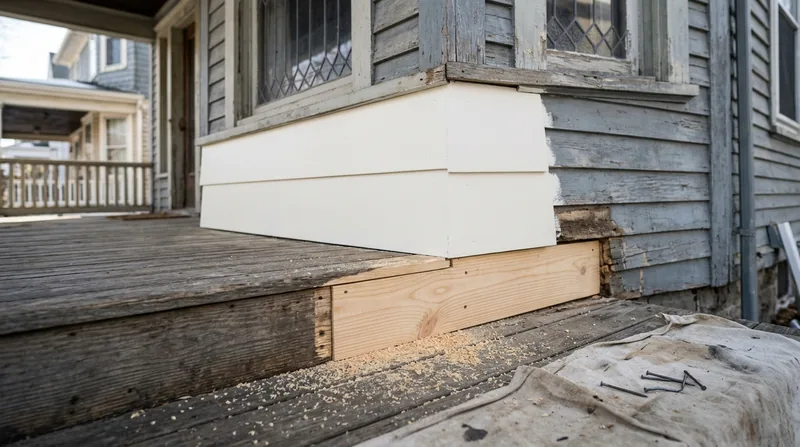




Wood Rot & Dry Rot Repair in Rochester is a winter problem driven by lake-effect snow, ice dams, and freeze-thaw cycles that soak fascia, sills, porch decks, and siding bottoms every January through March. Rochester sits on the Genesee River gorge just south of Lake Ontario, making it one of America's snowiest cities, and the oldest neighborhoods from Corn Hill to the East Avenue Preservation District are built from wood that was framed before 1978. When snow and ice melt soak into wood for months, then freeze solid and expand, the damage accelerates year after year. We cut out the rotted wood, treat what remains, and rebuild with rot-resistant lumber so the repair lasts, rather than patch cosmetically and watch it fail again next winter. This is structural work that matters, and it starts with an honest assessment of what can be saved.
Why Wood Rot & Dry Rot Repair Matters in Rochester's Historic Neighborhoods
Rochester's housing stock is among the oldest in America. Victorian mansions on East Avenue, Greek Revival homes in Corn Hill, Craftsman foursquares on Park Avenue, and modest wood-frame workers' cottages throughout the 19th Ward and South Wedge all rely on wood framing and exterior trim that is now 100 to 190 years old. The Genesee Valley climate is brutal on wood: heavy lake-effect snow, ice dams that hold meltwater against fascia and sills for weeks, humid summers with leaks feeding rot into framing, and freeze-thaw cycles that pry wood apart. Carpenter ants follow moisture into damp framing. Without repair, rotted fascia spreads to soffits, sills to rim joists, and porch decks to floor joists underneath. The cost of ignoring it climbs fast.
- Fascia and soffit rot allow water to enter the rim joist and band board, exposing the top of the foundation wall.
- Sill plate rot weakens the connection between the house frame and the foundation, causing the wall to settle unevenly.
- Porch deck rot spreads to the stringers and posts that support the structure, making the porch unsafe.
- Siding bottom rot opens the wall cavity to moisture and pest entry, feeding damage into the framing behind.
- Rotted floor joists under a porch or first-floor room can cause floors to sag or bounce underfoot.
Early repair stops the spread and costs far less than replacing a rotted rim joist or sistering new floor joists into a water-damaged subfloor later. The City of Rochester and surrounding towns require permits for structural work, so we help you understand what your local building department requires before work begins.
Key info: A single winter of ice dam water backing up into fascia can rot 8 to 12 inches of wood, and freeze-thaw cycles will split and pry open repairs done with the wrong species. We use rot-resistant lumber like Douglas fir and redwood for fascia and trim so the repair survives Rochester winters.
For more on how moisture damage spreads into framing, see our guide to Floor Joist & Subfloor Repair. The Rochester Building Department's Building and Housing Division can clarify permit thresholds for your neighborhood.
How We Repair Wood Rot in Rochester: From Diagnosis to Lasting Repair
Wood rot repair is not a cosmetic job. We start by identifying the full extent of damage, cutting out all soft or spongy wood, treating the remaining wood with a fungicide to arrest decay, and rebuilding with lumber that will stand up to Rochester's winters. The process takes time because rushing leads to failure. A rotted fascia that looks small on the surface often extends deep behind the siding, and we will not leave hidden decay behind. Here is how we work.
- We probe the wood with a screwdriver or awl to find the full boundary of rot, which often extends beyond what is visible.
- We cut out all rotted wood, undercutting edges so the new patch fits snugly and has maximum glue surface.
- We treat the remaining wood with a fungicide to prevent the decay from continuing in the framing behind.
- We rebuild the damaged section with rot-resistant lumber, fastened securely and sealed against water entry.
- We prime and paint or stain the repair to match the existing finish and protect the new wood.
This is why the repair holds. A porch deck rotted at the rim will be cut back to sound wood, the rim joist sister-braced or replaced if necessary, and the deck rebuilt on a solid frame. A fascia rotted by an ice dam will be cut back 12 to 18 inches on either side of the damage, the soffit checked and treated, and the fascia and soffit rebuilt in rot-resistant species.
Example: A 1920s Tudor in Pittsford had ice dam water rotting the fascia and soffit on the north side for three winters. The rim joist was sound, but the soffit was soft and the fascia was splitting. We cut back the fascia 18 inches past the rot, replaced the soffit and fascia in rot-resistant Douglas fir, sealed the rim joist, and primed and painted the new work to blend with the existing trim. The repair cost $1,850 and will outlast the roof.
Learn more about related structural repairs in our Framing & Structural Carpentry service guide.
| Repair Approach | Description | Best For |
|---|---|---|
| Localized patch | Cut out rotted section, treat the wood behind, rebuild with rot-resistant lumber and seal against water. | Fascia, soffit, sill, or trim rot that does not extend into the framing or structural members. |
| Sister-bracing | Cut out rotted wood from a floor joist or rim joist, bolt or bolt-lag a new pressure-treated member alongside the remaining sound wood. | Partial rot in a structural member where the remaining wood is sound enough to carry load with reinforcement. |
| Full replacement | Remove the entire rotted member (joist, rim joist, sill plate, or post) and install a new pressure-treated or rot-resistant replacement. | Rot that extends the full depth or length of a structural member, or rot in multiple joists or sill sections. |
| Preventive sealing | Treat sound wood with a fungicide and water-repellent sealer to arrest early-stage decay and slow future damage. | Framing showing early signs of moisture damage or soft spots, where structural integrity is not yet compromised. |
Wood Rot & Dry Rot Repair Cost in Rochester: What to Expect
Wood rot repair costs in Rochester start at $650 for a small localized patch, such as a 12-inch section of rotted fascia or a single sill section, and climb based on the size of the damaged area, the lumber species needed, access difficulty, and whether structural members are involved. A full fascia and soffit replacement on a two-story house can run $2,500 to $4,500. Porch deck repairs that involve sistering floor joists or replacing sill sections typically run $1,800 to $3,200. A complete rim joist replacement or multiple-joist repair in a basement can exceed $5,000 depending on the length and depth of the damage.
Several factors move the price up or down. A rotted area that is easy to access from a ladder costs less than one requiring scaffolding or a lift. Rot that is confined to exterior trim is faster and cheaper than rot that has spread into rim joists or framing. If the rotted wood has attracted carpenter ants or termites, the structural damage is often larger, and the repair takes longer. If you live in a historic district or if the home is listed on a historic register, the repair may require period-appropriate materials or finishes that add cost and time.
The best way to understand your repair cost is to get two or three on-site estimates. Each contractor will see the rot differently, and some may recommend replacement where repair is possible, or vice versa. We can help you document the damage for an insurance claim if the rot is tied to a covered event like a burst pipe or ice dam backup. See our full pricing guide for more detail on specific job types.
Wood Rot & Dry Rot Repair Near Me: What to Look for When Hiring a Carpentry Contractor in Rochester
Hiring the right carpenter matters because wood rot repair is skilled work and a poor repair will fail in a season or two. A good contractor will explain what is rotted, why it rotted, what will be removed and replaced, and what lumber and finishes will be used. They will answer questions about permits, insurance, and timeline without dodging. Here is what to verify before you hire.
- Confirm the contractor is fully insured and can provide a certificate of insurance on request.
- Ask for references from homeowners in Rochester or nearby towns who have had similar work done, and call at least two.
- Get a written estimate that details what will be removed, what materials will be used, the scope of work, and the total cost.
- Ask whether the job requires a permit from your local building department and who will pull it, and verify that your neighborhood or HOA has no restrictions on exterior repairs or materials.
- Confirm that the contractor will treat the remaining wood with a fungicide and use rot-resistant lumber for the repair, not just patch with whatever is cheap.
Rochester's historic neighborhoods often have design guidelines or restrictions on exterior work. If your home is in a historic district or if the work is on a visible facade, check with the City of Rochester's Building and Housing Division or your neighborhood association before work starts. A contractor who knows Rochester's older homes and understands the climate and the wood species that will survive here is worth the call. Contact us for a free estimate and we will walk you through the repair, the cost, and what to expect.
Wood Rot & Dry Rot Repair in Rochester: Pricing Guide
| Service | Price | Details |
|---|---|---|
| Small localized wood rot patch | Starting at $650 | Up to 12 inches of fascia, sill, or trim; includes cutting, treating, rebuilding, and finishing |
| Fascia and soffit section replacement | Starting at $1,400 | 20 to 40 linear feet; rot-resistant lumber, new soffit vents if needed, priming and painting included |
| Porch deck or rim joist repair | Starting at $1,800 | Sister-bracing, partial joist replacement, or sill section replacement; structural fastening and pressure-treated lumber |
| Full rim joist or multiple-joist repair | On estimate | Extensive rot in load-bearing members; requires on-site assessment to confirm scope and lumber sizing |
| Travel and estimate | Free | Included in Rochester and surrounding service areas; response within 24 hours at (585) 659-1882 |
Indicative pricing, the exact cost depends on square footage, finish, and site access. Free personalized estimate within 24h at (585) 659-1882.


