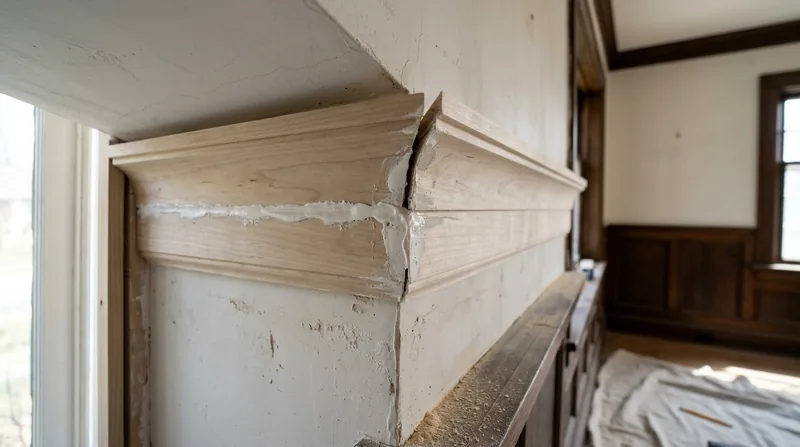




Rochester's Victorian mansions, Craftsman bungalows, and period homes along East Avenue and in Corn Hill demand crown molding and baseboard installation that respects their original character. The same is true for the grand Italianate and Queen Anne houses built between 1870 and 1920, and the Tudor and Colonial Revival homes scattered across Park Avenue and the Neighborhood of the Arts. Modern subdivisions in Pittsford, Penfield, and Webster call for clean, contemporary trim work. Whether you're restoring a 140-year-old sill with a coped joint or running crisp baseboard through a 1990s colonial, the quality of the installation matters as much as the material itself. At Rochester Carpentry, we handle crown molding, baseboards, chair rail, and window trim with the precision that Rochester's architectural diversity demands, using properly coped joints and period-matched profiles on historic homes, or sharp, modern lines on newer construction.
Why Crown Molding and Baseboard Installation Matters in Rochester's Older Homes
Rochester sits on the Genesee River gorge with long, freeze-thaw winters and heavy lake-effect snow. Humidity in summer and ice dams in winter drive moisture into walls and around trim details, which is why baseboards and crown molding need to be installed with precision and sealed properly. In homes built before 1950, original trim often shrinks, warps, or splits over decades, and settling in the frame can throw walls and ceilings out of plumb. A baseboard installed without accounting for that settlement will gap and look sloppy. Crown molding installed with a weak joint will separate and collect dust. The older the home, the more critical the craftsmanship.
- Historic homes in Corn Hill and the East Avenue Preservation District require trim profiles that match 1870s and 1890s millwork, not generic modern stock.
- Settling and out-of-plumb walls in century-old frame houses demand scribing and on-site fitting rather than factory-cut lengths.
- Proper coping at inside corners prevents gaps and gives a professional finish that stands out in high-visibility spaces.
- Sealed and finished trim resists moisture uptake and mold growth in Rochester's humid summers and damp basements.
Getting trim right the first time saves you from having to pull it down and reinstall it in five years.
Key info: Rochester's oldest neighborhoods, including the 19th Ward, Browncroft, and the South Wedge, are full of homes with original plaster walls and hand-planed trim. Modern trim installation on these homes requires respect for the existing plumb and level (or lack thereof), and an understanding of how wood moves with seasonal humidity swings. Shortcuts show immediately and look cheap.
For more on how moisture and settling affect wood in Rochester homes, see our wood rot and dry rot repair page.
How We Install Crown Molding and Baseboard: Process and Precision in Rochester
We start with a walk-through to measure the room, assess wall plumb and level, and identify any out-of-square corners or settling. We then select or match the profile, cut all pieces on-site with a miter saw, and use a coping saw for inside corners to create tight, invisible joints. Baseboards are secured with finish nails and construction adhesive, and crown molding is nailed into the top plate of the wall framing, never into drywall alone. Every joint is filled, sanded, and finished before we leave.
- We measure and cut all molding on-site to account for out-of-plumb walls and to ensure tight, properly coped inside corners.
- Crown molding is installed with fasteners into solid framing, not floating on drywall, to prevent sagging and joint separation over time.
- Baseboards are glued and nailed, then filled and finished to match your existing trim or paint scheme.
- Chair rail and window casing are installed using the same standards, with coped joints at all inside corners and mitered outside corners.
- All gaps are filled with paintable caulk or wood filler, sanded smooth, and left ready for paint or stain.
The result is trim that looks crisp and professional, with joints that stay tight through seasonal wood movement and humidity swings.
Example: A 1920s Tudor home in Pittsford had original 4-inch oak crown molding in the dining room, but a section had been replaced with cheap pine and a butt joint that had separated. We matched the profile, coped the new section into the existing trim, stained it to blend, and the room looks period-correct again. Same approach works in a 1990s colonial in Webster, except we run modern profiles and use paint instead of stain.
For more on our finish carpentry methods, see finish and trim carpentry.
Installation Methods and Best Practices
| Approach | Description | Best for |
|---|---|---|
| Coped Inside Corners | One piece runs full length, the other is cut with a coping saw to fit the profile of the first, creating an invisible joint. | All inside corners on crown molding, baseboards, and chair rail; the professional standard. |
| Mitered Outside Corners | Two pieces are cut at 45 degrees and fit together to form a 90-degree corner, creating a continuous profile line. | Outside corners and room transitions where the profile must flow without interruption. |
| Scribing to Out-of-Plumb Walls | Baseboard or trim is cut to follow the contour of an uneven wall, eliminating gaps and keeping the line of the trim parallel to the floor or ceiling. | Historic homes with settled frames, plaster walls, and out-of-square corners; common in Rochester's 1800s and early 1900s stock. |
| Profile Matching and Custom Millwork | Original trim profiles are measured and reproduced in new wood, or period-appropriate stock profiles are selected to blend with existing trim. | Restoration of historic homes where original trim must be matched, or adding new trim to rooms that already have period-correct molding. |
| Modern Crisp Install | Straight, clean lines with tight coped joints, minimal ornamentation, and sharp reveals; suited to contemporary homes and minimalist interiors. | 1980s and newer construction in Pittsford, Penfield, Webster, and newer subdivisions in Gates and Greece. |
Crown Molding and Baseboard Installation Cost in Rochester: What to Expect
Crown molding and baseboard installation in Rochester starts at $450 for a single room, depending on the linear footage, profile complexity, and whether walls are plumb or require scribing. A typical 12-by-14-foot bedroom with baseboard and one crown wall runs $800 to $1,400. A full-house job with crown molding in multiple rooms, baseboards throughout, and chair rail can range from $3,500 to $7,000 or more. The primary cost drivers are the linear footage of trim, the complexity of the profile, the number of inside corners (which require coping and take more time), and whether the walls are plumb or settled.
Out-of-plumb walls and historic homes with uneven framing add time because each piece must be scribed and fitted on-site rather than cut to a standard length. Modern homes with square corners and plumb walls move faster and cost less per linear foot. The finish (paint, stain, or natural) and the wood species (pine, oak, poplar, or custom millwork) also affect the price. We recommend getting 2 to 3 estimates so you can compare labor, material choices, and the contractor's approach to coping and finishing.
For a full breakdown and to schedule a free estimate, visit our pricing page or call (585) 659-1882.
Crown Molding and Baseboard Installation Near Me: What Rochester Homeowners Should Know When Hiring a Contractor
When you're ready to hire a carpenter for crown molding or baseboard installation, look for a contractor who can explain their approach to coping, scribing, and finishing. Ask to see examples of work in homes similar to yours, especially if you have a historic house or out-of-plumb walls. Confirm that the contractor is fully insured and has a clear process for measuring, cutting, and finishing on-site. Check references from recent jobs in Rochester, Brighton, Pittsford, or Irondequoit to see how their trim looks six months to a year after installation. If your home is in a historic district or protected neighborhood, confirm that the contractor understands any HOA or municipal guidelines for exterior trim or materials.
Ask whether the estimate is free and what it includes. A good estimate should list the linear footage, the profile name or description, the wood species, the finish, and the labor cost. Avoid contractors who give a price over the phone without seeing the space or who use butt joints instead of coped corners. Trim that is installed well will last decades; trim that is installed poorly will gap, separate, and look cheap within a few years.
Ready to move forward? Contact us for a free estimate, or call (585) 659-1882 to discuss your project.
Crown Molding & Baseboard Installation in Rochester: Pricing Guide
| Service | Price | Details |
|---|---|---|
| Single room (baseboard or crown molding) | Starting at $450 | 12-by-14-foot room with one wall of crown or full baseboard, includes coped corners and finishing |
| Full room with crown and baseboard | Starting at $800 | Baseboard plus crown molding in one room, includes coping, scribing for out-of-plumb walls, and finish |
| Chair rail or window casing | Starting at $350 | Single-room installation with coped inside corners and mitered outside corners, finished and ready for paint |
| Full-house trim package | On estimate | Crown molding in multiple rooms, baseboards throughout, and additional trim details require on-site assessment |
| Travel | Included | Rochester, Brighton, Pittsford, Penfield, Webster, Irondequoit, Greece, Gates, and surrounding areas included |
| Free estimate | No obligation | Response within 24 hours at (585) 659-1882, includes measurement and material recommendations |
Indicative pricing, the exact cost depends on square footage, finish, and site access. Free personalized estimate within 24h at (585) 659-1882.


