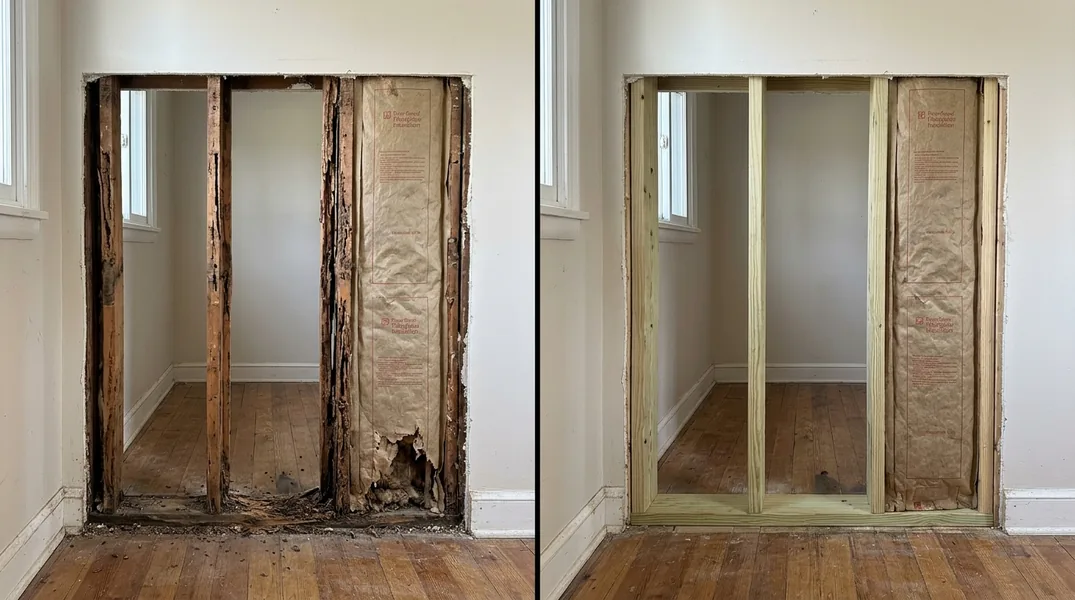
Understanding Ice Dam Damage vs. Dry Rot
Winter in Rochester brings beautiful snow, but it also brings a common problem that homeowners often confuse with dry rot: ice dam damage. Both conditions can compromise your home's structural integrity and lead to costly repairs if left unaddressed. However, they have very different causes, appearances, and solutions. Understanding the difference between these two issues is the first step toward protecting your home and your wallet.
Ice dams form when warm air from your home melts snow on the roof, which then refreezes at the colder eaves and gutters. This creates a barrier that traps water behind it, forcing moisture into your attic, walls, and fascia boards. Dry rot, on the other hand, is a fungal decay that occurs when wood is exposed to moisture over an extended period without proper ventilation. While both involve water, the mechanisms and long-term consequences are entirely different. A homeowner who mistakes one for the other might apply the wrong fix, wasting time and money while the real problem worsens.
What Does Dry Rot Look Like? Key Warning Signs
Dry rot has a distinctive appearance that can help you identify it quickly. The affected wood typically becomes dark brown or gray and develops a cracked, cubical pattern on its surface. This cracking looks almost like a checkerboard, with deep fissures running both horizontally and vertically through the wood grain. Unlike wet rot, which tends to be softer and more spongy, dry rot wood becomes brittle and can crumble between your fingers when the decay is advanced. You might also notice a musty, earthy smell in areas where dry rot is present, particularly in poorly ventilated spaces like attics or crawl spaces.
One of the most telling signs of dry rot is that it can spread rapidly through wood without requiring constant visible moisture. The fungus that causes dry rot can transport water through its own mycelium network, allowing it to travel through your home's wooden structure even in areas that appear dry. This is why dry rot is sometimes called the silent killer of wooden structures. If you notice soft spots in your fascia boards, spongy wood around your roofline, or wood that feels hollow when you tap it, these are red flags that Wood Rot & Dry Rot Repair should be your next call. The earlier you catch dry rot, the less extensive (and expensive) the repairs will be.
Identifying Ice Dam Damage and Fascia Damage
Ice dam damage presents differently from dry rot, though the two can sometimes occur together in the same home. When ice dams form along your roofline, they trap water that backs up under your shingles and into your fascia boards, soffit, and the wood framing behind them. The telltale signs of ice dam damage include water stains on your ceiling or walls, peeling paint on your fascia or soffit, visible icicles hanging from your gutters in a thick, uneven line, and moisture or frost in your attic during winter months. You might also notice that damage appears primarily on the north side of your roof or in areas where your roof meets the house, since these spots are most prone to ice dam formation in Rochester's cold climate.
Fascia damage from ice dams often looks like water damage rather than the cubical cracking pattern of dry rot. The wood might appear swollen, warped, or discolored, with paint bubbling or peeling away. In some cases, the fascia boards may separate from the house or show signs of rot where water has penetrated deeply. The key difference is timing and location: ice dam damage is seasonal and concentrated along the roofline, whereas dry rot can develop anywhere wood is exposed to prolonged moisture and poor ventilation. If you see damage that's limited to your gutters, downspouts, and the immediate roofline area, ice dams are likely the culprit. However, if the damage has spread into your attic framing or interior walls, you may be dealing with a combination of both problems.
Wood Rot vs. Water Damage: How They Differ
Understanding the distinction between wood rot and water damage is crucial for proper repair. Water damage is the immediate harm caused by moisture exposure, while wood rot is the long-term fungal decay that develops when wood remains wet or damp for extended periods. Water damage might cause swelling, discoloration, or temporary softening of wood, but the wood can often recover if dried out quickly. Wood rot, however, is permanent. Once the fungal decay takes hold, the wood's cellular structure breaks down irreversibly, and the affected sections must be replaced rather than simply dried out.
This distinction matters enormously for repair strategy. If you catch water damage early from an ice dam, you might be able to dry out the affected areas and prevent rot from developing. But if water damage goes unaddressed for months or years, it inevitably leads to wood rot, which requires complete removal and replacement of the damaged wood. This is why homeowners in Rochester should act quickly when they notice water intrusion. The longer moisture sits in your wood, the more likely it is to transition from a water damage problem into a structural rot problem that demands professional intervention.
When to Call a Professional: Wood Rot and Dry Rot Repair Near Me
If you've identified signs of dry rot, ice dam damage, or wood rot in your home, it's time to bring in a professional. While minor water stains might be handled with cleanup and ventilation improvements, structural wood decay requires expert assessment and repair. A qualified carpenter can determine the extent of the damage, identify whether the problem is active or dormant, and recommend the most cost-effective repair strategy. Attempting DIY repairs on structural wood issues often leads to incomplete fixes that allow the problem to spread, ultimately costing you far more in the long run.
Rochester Carpentry specializes in identifying and repairing both ice dam damage and dry rot throughout the Rochester area, including neighboring communities like Brighton and Pittsford. Our team can inspect your fascia, roofline, and interior framing to pinpoint exactly what you're dealing with. Whether you need Wood Rot & Dry Rot Repair, fascia replacement, or structural restoration, we have the expertise to restore your home's integrity. Contact us at (585) 659-1882 or request a free estimate today to get started.
Prevention Tips to Avoid Future Damage
Once you've addressed existing damage, prevention becomes your best defense against future problems. For ice dam prevention, ensure your attic is properly insulated and ventilated to minimize heat loss that melts snow on your roof. Keep gutters clean and free of debris so water can flow freely away from your home. In extreme cases, heated cables or additional ventilation may be necessary. For dry rot prevention, maintain proper drainage around your foundation, ensure your crawl space or basement has adequate ventilation, and address any plumbing leaks immediately. Keep wood surfaces painted or sealed, and inspect your fascia, soffit, and roofline regularly for signs of moisture intrusion.
Regular maintenance inspections can catch problems early, when repairs are less invasive and expensive. If you're unsure whether your home is vulnerable to these issues, a professional assessment can identify weak points in your insulation, ventilation, and drainage systems. By staying proactive, you can prevent the water damage and wood rot that plague many older homes in the Northeast. When you do spot trouble, don't delay. The sooner you address ice dam damage or dry rot, the simpler the fix and the less structural damage your home will suffer. Call Rochester Carpentry at (585) 659-1882 if you need guidance on prevention or if you've already spotted warning signs.
Looking for a professional carpentry contractor in Rochester? Rochester Carpentry responds fast for all your carpentry needs.
Get a Free QuoteOur services: Wood Rot & Dry Rot Repair · Termite Damage Repair · Floor Joist & Subfloor Repair